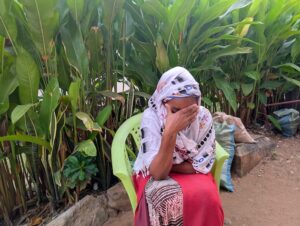
Salima Kitwana, a resident of Dar es Salaam, holds her head in anguish as she speaks about the disappearance of her son Hemedi, a moment that captures the deep uncertainty and pain endured by families still searching for answers. Credit: Kizito Makoye/IPS
By Kizito Makoye
DAR ES SALAAM, Tanzania, Jul 13 2026 – Every evening just before sunset, Salima Kitwana hobbles into her backyard holding a photograph.
In the picture, her son Hemedi, wearing a green football jersey, smiles awkwardly into the camera, unaware that his fate would soon be engulfed in one of Tanzania’s darkest political chapters.
At 57, Kitwana has lived with diabetes for nine years, but she says the illness has worsened since her son’s disappearance after the disputed 2025 elections and the violent crackdown that followed.
Her gnarled toes, wrapped in iodine-stained gauze, bear the marks of chronic ulcers. Some days she sits silently for hours. On others, she writhes in pain, whispering his name as if repetition might bring him back.
“Since Hemedi disappeared, my body has changed. I do not eat or sleep properly. My illness has worsened because my mind is not at peace,” she tells IPS.
Eight months on, he has not returned.
“My neighbours tell me to move on. Honestly, how do I move on when I don’t know whether my son is alive or dead?” she says.
Like Kitwana, hundreds of families across Tanzania are still searching for answers after post-election violence that officials say left 518 people dead. Rights groups say the toll may be higher, with dozens still missing.
Her grief, private and intimate, is now part of a wider political reckoning that is beginning to reverberate far beyond Tanzania’s borders.
Activists have accused President Samia Suluhu Hassan of using excessive force to tighten her grip on power — allegations authorities reject, insisting security operations were necessary to restore order.
But as pressure for accountability mounts, Tanzania’s internal crisis is increasingly drawing international scrutiny, raising tougher questions in European capitals over whether development aid can remain insulated from governance concerns.
For families like Kitwana’s, those debates don’t matter. Yet they are now tied to these decisions being made thousands of kilometres away.
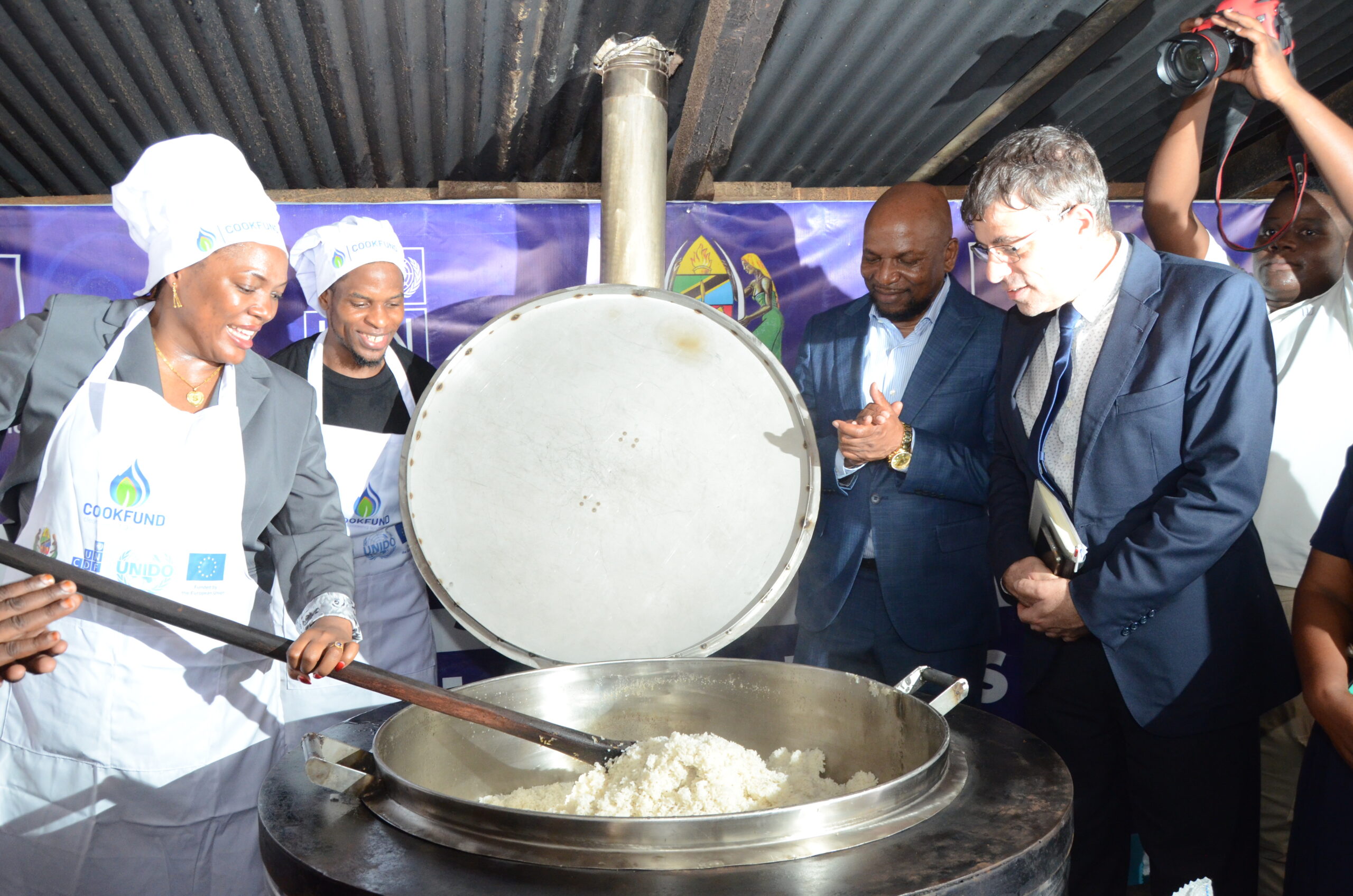
Salome Makamba, deputy minister for energy, cooks lunch on a clean-energy stove installed through the EU-funded CookFund programme in Tanzania. The initiative has equipped more than 45 public institutions with modern cooking technologies, benefiting over 62,000 students while reducing reliance on firewood and charcoal. As the European Parliament questions aspects of future EU engagement with Tanzania, projects such as CookFund have become a reminder of the development gains at stake, including improved health, reduced deforestation and expanded access to clean energy for schools and communities. Credit: UNCDF/CookFund
Last month, the European Parliament moved to block the proposed disbursement of a 156-million-euro (USD 168 million) development package for Tanzania’s 2026 cooperation programme, citing concerns over post-election violence and democratic backsliding.
The vote does not automatically suspend assistance. Under EU fiduciary rules, final decisions rest with the European Commission and subsequent negotiations with Tanzanian authorities.
Still, the message was politically heavy.
European funding has long been embedded in Tanzania’s development architecture, supporting education, infrastructure, governance reforms, and social services.
But analysts say the vote reflects a deeper rupture.
Like Kitwana’s loss, “This vote is about trust being broken – between partners that once shared development priorities,” said a Dar es Salaam-based political commentator, Joseph Ngwegwe.
He blamed the government for underestimating the diplomatic cost of the post-election crackdown.
“Our reputation has taken a serious hit because those in power operated under the illusion that post-election violence could be treated as a purely internal security matter and quietly fade away,” he told IPS.
Ngwegwe warned that Tanzania may now be entering a period where incremental reforms are no longer sufficient.
“This is a moment of rupture and renewal. We have reached a point where patchwork reforms are no longer enough—the system itself needs fundamental rethinking,” he said.
For Kitwana, such analysis offers no relief. Her concern remains fixed on absence, not diplomacy.
Sensing growing outcry over the EU decision, Tanzania’s Ministry of Foreign Affairs moved quickly to contain perceptions of a looming aid crisis.
On June 19, 2026, the ministry issued a statement insisting that the European Parliament’s vote was not binding and had been misinterpreted as a final decision.
“The vote in the European Parliament is not the final decision of the European Union regarding Tanzania’s 2026 cooperation programme,” the statement said.
Officials also sought to minimise the financial implications by detailing the structure of the package, noting that only 17 million euros would have flowed directly through state coffers, with the rest channelled through private sectors.
But critics argue that this defence misses the broader impact.
Godlisten Mallisa, a lawyer and government critic, dismissed the official interpretation as politically optimistic and economically misleading.
“When the process moved from the European Parliament’s Development Committee to the full Parliament and the outcome remained unchanged, suggesting things will dramatically shift at the final stage ignores the political message being sent,” he said.
He warned that even funds routed through non-governmental organisation actors still circulate within the national economy.
“It is misleading to suggest the impact will be limited because most of the money was channelled through civil society organisations and development partners,” he said. “These institutions employ Tanzanians, pay taxes, support local businesses and deliver services.”
For households like Kitwana’s, such financial debates translate into uncertainty layered on top of grief.
The European decision has also amplified broader diplomatic tensions.
In Washington, a bipartisan legislative proposal—the Reassessing the United States–Tanzania Bilateral Relationship Act—has sailed through key Senate committee stages.
The bill calls for a comprehensive review of security cooperation, trade preferences, and development assistance, and proposes targeted sanctions under the Global Magnitsky framework against officials accused of involvement in post-election violence.
It also directs US agencies to assess Tanzania’s growing alignment with Moscow and Beijing.
The pressure is compounded by the continued detention of opposition leader Tundu Lissu, which Western governments and rights groups cite as evidence of shrinking democratic space.
Authorities have rejected allegations of political persecution.
Back in Bunju, on the outskirts of Dar es Salaam, Kitwana’s life is measured not in parliamentary votes or diplomatic statements but in the silence of her home.
Some mornings she believes her son will return. On other mornings, she prepares herself for news she has not yet received.
“If someone told me he had died, I would mourn him and pray for him,” she says. “But this silence is worse. Every day I wake up hoping he will walk through that door.”
IPS UN Bureau Report
!function(d,s,id){var js,fjs=d.getElementsByTagName(s)[0],p=/^http:/.test(d.location)?’http’:’https’;if(!d.getElementById(id)){js=d.createElement(s);js.id=id;js.src=p+’://platform.twitter.com/widgets.js’;fjs.parentNode.insertBefore(js,fjs);}}(document, ‘script’, ‘twitter-wjs’);