Europe’s Funding Question Puts Tanzania’s Fragile Democracy on Trial

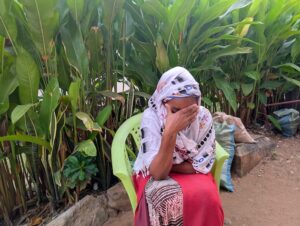
Salima Kitwana, a resident of Dar es Salaam, holds her head in anguish as she speaks about the disappearance of her son Hemedi, a moment that captures the deep uncertainty and pain endured by families still searching for answers. Credit: Kizito Makoye/IPS

Salima Kitwana, a resident of Dar es Salaam, holds her head in anguish as she speaks about the disappearance of her son Hemedi, a moment that captures the deep uncertainty and pain endured by families still searching for answers. Credit: Kizito Makoye/IPS

By Kizito Makoye
DAR ES SALAAM, Tanzania, Jul 13 2026 – Every evening just before sunset, Salima Kitwana hobbles into her backyard holding a photograph.

In the picture, her son Hemedi, wearing a green football jersey, smiles awkwardly into the camera, unaware that his fate would soon be engulfed in one of Tanzania’s darkest political chapters.

At 57, Kitwana has lived with diabetes for nine years, but she says the illness has worsened since her son’s disappearance after the disputed 2025 elections and the violent crackdown that followed.

Her gnarled toes, wrapped in iodine-stained gauze, bear the marks of chronic ulcers. Some days she sits silently for hours. On others, she writhes in pain, whispering his name as if repetition might bring him back.

“Since Hemedi disappeared, my body has changed. I do not eat or sleep properly. My illness has worsened because my mind is not at peace,” she tells IPS.

Eight months on, he has not returned.

“My neighbours tell me to move on. Honestly, how do I move on when I don’t know whether my son is alive or dead?” she says.

Like Kitwana, hundreds of families across Tanzania are still searching for answers after post-election violence that officials say left 518 people dead. Rights groups say the toll may be higher, with dozens still missing.

Her grief, private and intimate, is now part of a wider political reckoning that is beginning to reverberate far beyond Tanzania’s borders.

Activists have accused President Samia Suluhu Hassan of using excessive force to tighten her grip on power — allegations authorities reject, insisting security operations were necessary to restore order.

But as pressure for accountability mounts, Tanzania’s internal crisis is increasingly drawing international scrutiny, raising tougher questions in European capitals over whether development aid can remain insulated from governance concerns.

For families like Kitwana’s, those debates don’t matter. Yet they are now tied to these decisions being made thousands of kilometres away.
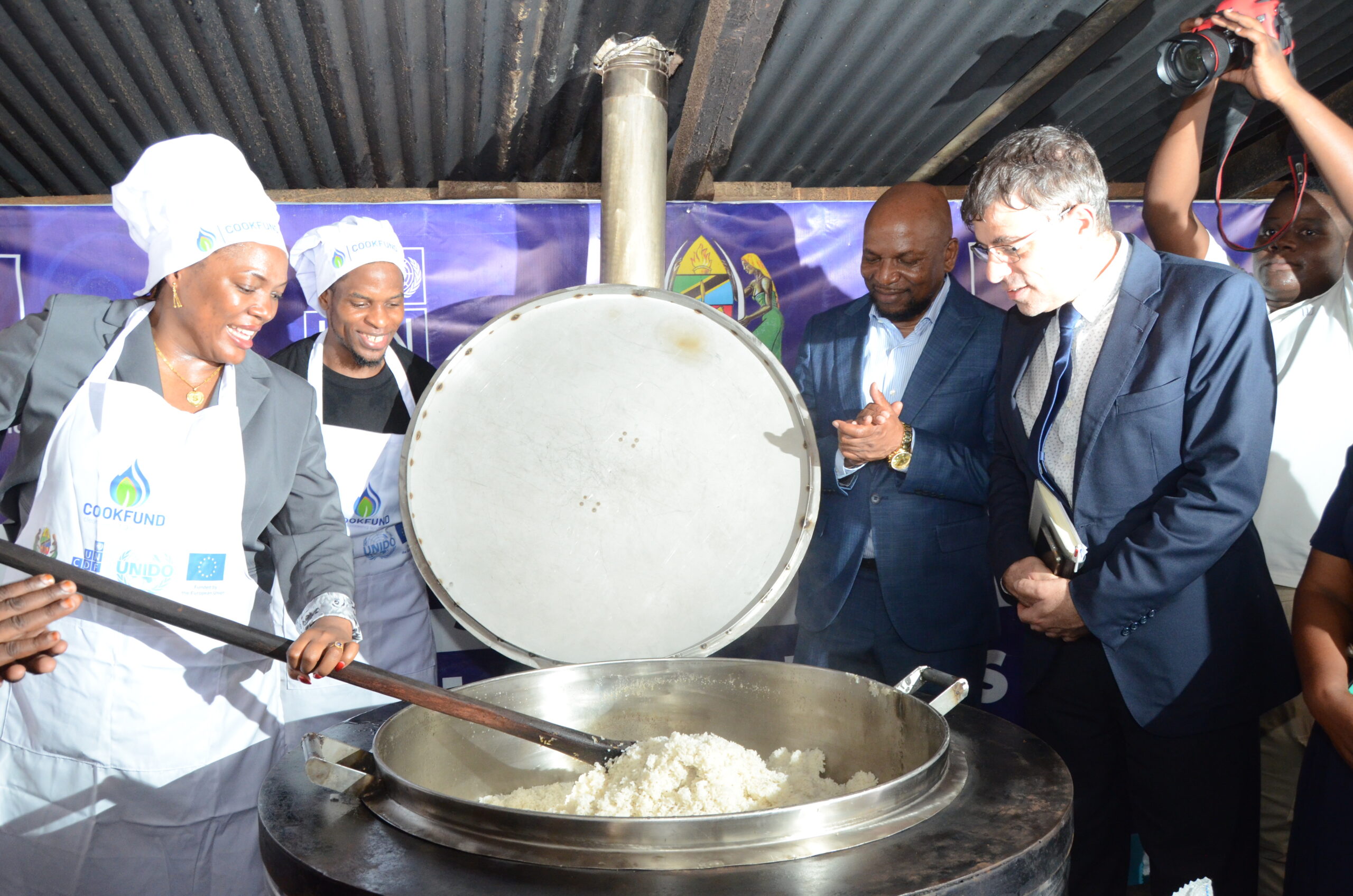
Salome Makamba, deputy minister for energy, cooks lunch using a clean-energy stove installed through the EU-funded CookFund programme in Tanzania. The initiative has equipped more than 45 public institutions with modern cooking technologies, benefiting over 62,000 students while reducing reliance on firewood and charcoal. As the European Parliament questions aspects of future EU engagement with Tanzania, projects such as CookFund have become a reminder of the development gains at stake, including improved health, reduced deforestation and expanded access to clean energy for schools and communities. Credit: UNCDF/CookFund

Salome Makamba, deputy minister for energy, cooks lunch on a clean-energy stove installed through the EU-funded CookFund programme in Tanzania. The initiative has equipped more than 45 public institutions with modern cooking technologies, benefiting over 62,000 students while reducing reliance on firewood and charcoal. As the European Parliament questions aspects of future EU engagement with Tanzania, projects such as CookFund have become a reminder of the development gains at stake, including improved health, reduced deforestation and expanded access to clean energy for schools and communities. Credit: UNCDF/CookFund

Last month, the European Parliament moved to block the proposed disbursement of a 156-million-euro (USD 168 million) development package for Tanzania’s 2026 cooperation programme, citing concerns over post-election violence and democratic backsliding.

The vote does not automatically suspend assistance. Under EU fiduciary rules, final decisions rest with the European Commission and subsequent negotiations with Tanzanian authorities.

Still, the message was politically heavy.

European funding has long been embedded in Tanzania’s development architecture, supporting education, infrastructure, governance reforms, and social services.

But analysts say the vote reflects a deeper rupture.

Like Kitwana’s loss, “This vote is about trust being broken – between partners that once shared development priorities,” said a Dar es Salaam-based political commentator, Joseph Ngwegwe.

He blamed the government for underestimating the diplomatic cost of the post-election crackdown.

“Our reputation has taken a serious hit because those in power operated under the illusion that post-election violence could be treated as a purely internal security matter and quietly fade away,” he told IPS.

Ngwegwe warned that Tanzania may now be entering a period where incremental reforms are no longer sufficient.

“This is a moment of rupture and renewal. We have reached a point where patchwork reforms are no longer enough—the system itself needs fundamental rethinking,” he said.

For Kitwana, such analysis offers no relief. Her concern remains fixed on absence, not diplomacy.

Sensing growing outcry over the EU decision, Tanzania’s Ministry of Foreign Affairs moved quickly to contain perceptions of a looming aid crisis.

On June 19, 2026, the ministry issued a statement insisting that the European Parliament’s vote was not binding and had been misinterpreted as a final decision.

“The vote in the European Parliament is not the final decision of the European Union regarding Tanzania’s 2026 cooperation programme,” the statement said.

Officials also sought to minimise the financial implications by detailing the structure of the package, noting that only 17 million euros would have flowed directly through state coffers, with the rest channelled through private sectors.

But critics argue that this defence misses the broader impact.

Godlisten Mallisa, a lawyer and government critic, dismissed the official interpretation as politically optimistic and economically misleading.

“When the process moved from the European Parliament’s Development Committee to the full Parliament and the outcome remained unchanged, suggesting things will dramatically shift at the final stage ignores the political message being sent,” he said.

He warned that even funds routed through non-governmental organisation actors still circulate within the national economy.

“It is misleading to suggest the impact will be limited because most of the money was channelled through civil society organisations and development partners,” he said. “These institutions employ Tanzanians, pay taxes, support local businesses and deliver services.”

For households like Kitwana’s, such financial debates translate into uncertainty layered on top of grief.

The European decision has also amplified broader diplomatic tensions.

In Washington, a bipartisan legislative proposal—the Reassessing the United States–Tanzania Bilateral Relationship Act—has sailed through key Senate committee stages.

The bill calls for a comprehensive review of security cooperation, trade preferences, and development assistance, and proposes targeted sanctions under the Global Magnitsky framework against officials accused of involvement in post-election violence.

It also directs US agencies to assess Tanzania’s growing alignment with Moscow and Beijing.

The pressure is compounded by the continued detention of opposition leader Tundu Lissu, which Western governments and rights groups cite as evidence of shrinking democratic space.

Authorities have rejected allegations of political persecution.

Back in Bunju, on the outskirts of Dar es Salaam, Kitwana’s life is measured not in parliamentary votes or diplomatic statements but in the silence of her home.

Some mornings she believes her son will return. On other mornings, she prepares herself for news she has not yet received.

“If someone told me he had died, I would mourn him and pray for him,” she says. “But this silence is worse. Every day I wake up hoping he will walk through that door.”

IPS UN Bureau Report


!function(d,s,id){var js,fjs=d.getElementsByTagName(s)[0],p=/^http:/.test(d.location)?’http’:’https’;if(!d.getElementById(id)){js=d.createElement(s);js.id=id;js.src=p+’://platform.twitter.com/widgets.js’;fjs.parentNode.insertBefore(js,fjs);}}(document, ‘script’, ‘twitter-wjs’);


 

Does India’s Women’s Reservation Bill Shortchange Women Yet Again?

Ranjana Kumari, activist.

Ranjana Kumari, activist.

By Kumkum Chadha
NEW DELHI, Jul 13 2026 – To say that the men scored over women yet again would be an understatement. To say that the women lost and men have won would be an oversimplification and to say that political manoeuvring, intrigue and deceit outdid half of India’s population would be stating the obvious.

So, what is the story? Or the plot with its twists and turns? Or the game that women lost even before they started playing?

Rewind to three decades when the women of India woke up to what today is branded as political empowerment.

In this context the one name that stands out is that of Parliamentarian Geeta Mukherjee, who chaired the Joint Parliamentary Committee to examine a Bill seeking reservation of seats for women in Parliament and state legislatures: 33 percent to be precise.

It was in 1996 that a legislation for this was tabled in the Lower House of the Indian Parliament

We are into 2026, and the women of India are still fighting for legitimacy in political power, relentlessly demanding what is their due.

The Women’s Reservation Bill has been tabled in Parliament several times – five times, to be precise.

Its history and the twists and turns that come with it are telling. Add to the mix the interesting questions that its tumultuous journey has thrown up. But more importantly, what has this unfulfilled dream done to the dignity of women of the world’s largest democracy? Simply put, it has left them hanging, staring in the dark with a ‘will it? will it not?’  question. As things have panned out, the future holds little hope.

Rewind to the Constituent Assembly that adopted the Constitution of India in 1949. Of its 389 members, only 15 were women. There were questions even then, but they were different.

If a woman member feared that reservation would mean restriction and, hence, exclusion of women from general seats, another member asked quite pointedly: “Were women not led by the heart, and was politics not a matter of the mind? Even as the heart versus the head debate dogged minds, the issue remained unresolved.

Some fifty years later, in 1996 to be exact, it was Sushma Swaraj, then a Parliament Member and later India’s foreign minister, who resurrected the issue. She told Parliament that only 6.5 of the 543 members in the Lower House of Parliament were women. Without saying it in so many words, she indicated that the situation was dismal and the future bleak.

Swaraj’s words were prophetic. The future was indeed bleak because three decades on, the women continue to fight for what should rightfully be theirs.

When the Bill was introduced in Parliament in 1996 and later in 1998 and 1999, the men kind of ganged up to ensure that a smooth passage was thwarted. On all three occasions, the Bill lapsed upon the dissolution of the Lower House in Parliament.

However, in 2008 another route was adopted and this time around it was introduced in the Upper House of Parliament.

This obviated the possibility of a lapse given that the Indian Parliament is structured in such a way that the Lower House has a fixed five-year term while the Upper House is a permanent chamber which is not subject to dissolution. Unlike the Lower House of Parliament, Bills tabled in the Upper House do not lapse.

That notwithstanding, the smooth passage of the Bill in the Lower House still remains a question mark, and that too a big one, staring at women in the face.

All through this rigmarole what stood out and continues to is the contempt and disregard men have for women in this part of the world.  And these are no ordinary men but those who have been elected to work for the welfare of the people, men and women alike. Therefore, when they speak of women in disparaging terms, one stops to ask: have we actually progressed or do we continue to be a regressive and male-dominated society – one where men outside and fathers, brothers and husbands at home continue to call the shots?

Even as the answer is obvious, one’s soul may cringe at the manner in which lawmakers inside Parliament have targeted women during the several debates on reserving 33 percent of seats in Parliament and state legislatures.

Sample this: During a 1997 parliamentary debate, two leaders, both from the backward castes, opposed reservation even as they demanded what was termed a “quota within quota” for women. Decode this and it means that within the 33 percent reservation ensure a certain representation for the other backward castes, Dalits and Muslim women.

In the Indian context, the untouchables are called Dalits, while the Other Backward Castes, or OBCs as they are popularly known, represent the marginalised. The Muslims comprise the minorities in India.

But back to the debate in Parliament when these two leaders spearheaded the anti-reservation campaign under the garb of protection for women from the marginalised and backward castes.

They use “choicest phrases”, if one can use the term, to denigrate women segregating the elite and educated from the rural and the unversed.

 Calling them par-kati mahilayen, roughly translated as ‘short-haired and elite’, a former Union Minister, Sharad Yadav, from the state of Bihar, threatened to consume poison if a Bill was passed without proper caste representation. His take: women who are privileged, urban and elite do not understand the struggle of their counterparts living in far-flung rural areas.

To quote him: “Like Socrates, who died consuming poison fighting for principles, I am also willing to die fighting for principles.” Given the male mind-set, such a statement may well be interpreted as if it is women’s reservation, and it will be “over my dead body”.

A former Chief Minister, Mulayam Singh Yadav, from the state of Uttar Pradesh, had another fear. Way back in 2010 he had told his constituents: “The kind of women who will enter Parliament… The wives and daughters of officers and businessmen, who invite whistles from boys…” He also said that rural women would be left out because they are “not that attractive”.

Another leader, a former Union Minister and Chief Minister, Lalu Prasad Yadav from the state of Bihar, said that India being a “male-dominated society”, to use his exact words, women vote according to the political diktat of the family. In other words, they are incapable of thinking and choosing independently and are a rubber stamp of their husbands: “My own wife votes according to my diktat,” the former Chief Minister had then said.

In later years, Yadav anointed his wife to succeed him when he was jailed in a fodder scam.

For the record, Lalu Prasad Yadav, who has served as Chief Minister of India’s populous state of Bihar and also as Union Minister, was convicted in a fodder scam and charged with syphoning off huge amounts from the animal husbandry department. This followed his resignation. Not the one to cede political space to anyone outside the family, Yadav named his wife, Rabri Devi, as his successor. That Devi was uneducated and could not even sign her name did not matter considering she was her husband’s proxy.

The first woman to head the state of Bihar, Devi ruled the state not once but three times over.

That notwithstanding, it is true that in India men dictate where and how their wives, mothers and sisters, or rather all the women in the family, should vote. This is one of the reasons why En bloc voting is a rule rather than an exception among women in rural areas.

However, by 2023 the power of the women’s vote dawned on political parties, particularly under Prime Minister Narendra Modi, who has launched several welfare schemes for women while heading the Government in India.

Unwilling to lose the momentum of emerging as a votary for women’s rights, the Modi Government brought in the Reservation Bill, which was passed in the Lower House of the Indian Parliament, both grudgingly and willingly.

With this, history took a half-turn: a half-turn because even while the Bill mandated a 33 per cent reservation, it was tied to a distant future, namely the upcoming census and subsequent redrawing of electoral constituencies or delimitation as it is better known and understood.

Ostensibly, it was a step forward, but in reality, it was an idea stuck in time. Linking reservation to the Census and delimitation that would follow was talking of a distant future because there is neither clarity on when the Census will take place nor a clear date, rather year, when the delimitation will take effect. Hence, the passing of the Bill remains a cosmetic measure and one on paper.

The truth of the matter is that men are reluctant to cede political space to women. Yet for any political party to oppose a  reform like political empowerment for women is clearly counter-productive. No party can be seen as being a roadblock to women’s progress and risk being perceived as anti-women.

Therefore, while each party professes support for the issue and the cause, the real story is that they do not want to see reservation being a reality. The answer is simple: if 33 percent reservation for women becomes a law, then it is the men who will have to give up their seats to make way for women. In a patriarchal society like India, this seems like a pipe dream.

Having said that, it is ironic that every political party has committed to providing reservation in their political manifestos but no party has budged an inch to work towards this welfare measure. If anything, they have consistently worked against the Bill becoming a reality.

Fast forward to 2026 when the Government brought in the Women Reservation Bill in Parliament yet again through a special session of Parliament. But, this time around, the motive was suspect. The move was sudden and came at a time when the state elections were underway. Therefore, there was more politics than good intent that was attributed to what the Government wanted to showcase as women’s welfare.

What made it worse was that the Government tagged another bill with the women’s reservation bill: delimitation.

For the uninitiated, delimitation is the process of redrawing the boundaries of electoral constituencies. By this principle, seats for Parliament and states would be reallocated on the basis of the latest census, which is yet incomplete.

The Government’s bid to club delimitation with the reservation bill was decried. Opposition parties slammed the Government for making women a scapegoat and “using women” for a political end.

To quote an Opposition MP, Mahua Moitra, the Government’s move was “delimitation wrapped in a saree”. What she meant was that the Government is firing from the shoulders of women to push through legislation which otherwise would be opposed tooth and nail.

It is pertinent to mention that the opposition-ruled states are against delimitation, as it erodes the political power of those states that have fewer numbers in terms of population. With the voting numbers stacked against the Government, the Delimitation Bill would have hit a roadblock  in Parliament. Hence, the Government linked the two Bills. The logic: delimitation would ride piggyback on the Women’s Reservation Bill. The women’s vote being very important in elections, no party would like to be seen as opposing women’s reservation.

However, the Government’s calculations went haywire and the Opposition unitedly voted against the Bill. The result: What seemed achievable fell through.

As an opposition member of Parliament, Sushmita Dev explained, “We are not against women’s reservation. But what is a betrayal is the Government riding on the shoulders of women to push delimitation. Why link delimitation with women’s reservation? Why bring in politics? Why push an agenda? Why not given women the dignity they deserve?” is what she asks.

Politics apart, women who have been fighting for women’s empowerment for decades see this slugfest between the Government and the Opposition as “a lost opportunity”. To quote activist Ranjana Kumari, Founder of the Centre for Social Research: “The defeat of the Women Bill in Parliament compels deeper reflection on the state of India’s democracy. There is a gap between intent and action. The political parties must take responsibility and move beyond tokenism. Globally, gender quotas have demonstrated that change is possible when backed by political commitment and clear design. India stands at a similar crossroads.”

Kumari has been in the forefront of the women’s reservation movement in India.

It is at this juncture that one needs to stop and ask: For how long will the women of India keep knocking doors? For how long will political parties and politicians continue making them scapegoats to achieve their political goals? Why is their due being denied to them time and again? Why do they continue to be victims at the hands of men who are politically powerful?

Why does politics get the better of women? Why is their future being linked to complicated legislative processes? Why are they being subjected to political juggernauts?

Too many questions but one straight and simple answer: The men of India, as in many other parts of the world, want women to continue being subservient and remain second class in a world where half the sky is theirs.

IPS UN Bureau Report


!function(d,s,id){var js,fjs=d.getElementsByTagName(s)[0],p=/^http:/.test(d.location)?’http’:’https’;if(!d.getElementById(id)){js=d.createElement(s);js.id=id;js.src=p+’://platform.twitter.com/widgets.js’;fjs.parentNode.insertBefore(js,fjs);}}(document, ‘script’, ‘twitter-wjs’);