AACSB and Scholarly Societies Release Framework to Advance Research Impact in Business Education

TAMPA, Fla., May 26, 2026 (GLOBE NEWSWIRE) — Business schools are under growing pressure to demonstrate that their research matters beyond academia, yet most lack a clear framework for doing so. Today, a coalition of 10 global academic organizations is offering a path forward through the release of A Framework for Research Impact: Insights, Pathways, and Calls to Action.

The report coincides with AACSB’s inaugural Research Impact Conference, offered in partnership with the Academy of Management, and provides business schools with an actionable approach and resources to help broaden how they define, assess, and communicate research impact.

Developed by AACSB’s Global Research Impact Task Force, the framework presents an expanded understanding of the research impact ecosystem, one that connects scholarship to business practice, public policy, teaching, and society.

Global Research Impact Task Force

  • AACSB International 
  • Academy of International Business 
  • Academy of Management 
  • American Accounting Association 
  • American Marketing Association 
  • Asia Academy of Management 
  • Association for Information Systems 
  • European Accounting Association 
  • Journal of Operations Management 
  • Production and Operations Management Society

The framework reflects months of work by the task force and includes extensive input from across the business education ecosystem through global surveys, roundtables, focus groups, advisory discussions, and feedback on an exposure draft released in October 2025. It encourages institutions to adopt more intentional and mission-aligned approaches to supporting, evaluating, and communicating research impact.

“For too long, research impact has been defined too narrowly,” said Lily Bi, president and chief executive officer of AACSB. “I am excited to share the work of the task force from over the last year. This framework helps institutions move from measuring outputs to understanding and a outcomes and impact.”

The report, which is just phase one of an ongoing effort to drive systemwide change, emphasizes that impactful research often emerges through ongoing engagement among researchers, practitioners, policymakers, learners, and communities. It also highlights the importance of aligning institutional strategy, incentives, culture, and infrastructure to support multiple forms of research impact.

Among its recommendations, the framework encourages business schools to:

  • Develop mission-aligned research impact strategies
  • Strengthen connections among research, teaching, and external engagement
  • Adopt more balanced approaches to evaluating research impact
  • Recognize both quantitative and qualitative evidence of impact
  • Create institutional environments that support diverse forms of impactful scholarship

To support business schools in implementation, the framework includes practical resources such as a Research Impact Assessment Tool and a Research Impact Ecosystem Guide. Together, these resources help schools evaluate current practices, identify opportunities for improvement, and strengthen institutional alignment around research impact.

The framework also aligns with AACSB’s 2026 Global Standards for Business Education™ and associated Pathways to Impact model, which call for a broader understanding of impact by business schools.

The report concludes with a series of strategic imperatives for stakeholder groups across the research ecosystem—including scholarly associations, publishers, journals, media, ranking bodies, and others—calling for a more collective and coordinated approach to advancing research impact and building on the momentum generated by the task force.

For more information and to access the full report, visit aacsb.edu/research-impact-framework.

About AACSB

Established in 1916, AACSB International (AACSB) connects educators, learners, and businesses to create the next generation of great leaders. With more than 2,000 member organizations and over 1,000 accredited business schools worldwide, AACSB is the world’s largest business education network. Through its global standards, accreditation, and thought leadership, AACSB fosters engagement, accelerates innovation, and amplifies impact in business education.

aacsb.edu
[email protected]


GLOBENEWSWIRE (Distribution ID 9726585)
Ebola Outbreak in the DRC Raises Global Health Concerns Amid Conflict and Displacement

Ebola Outbreak in the DRC Raises Global Health Concerns Amid Conflict and Displacement

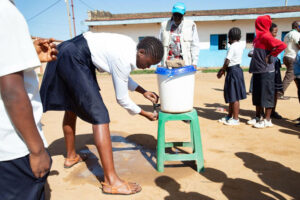
Elongo, 12, washes her hands at Epo‑Ville Primary School in Bunia, Ituri Province, DR Congo, on 22 May 2026. She had just taken part in a handwashing demonstration led by UNICEF WASH Officer Ciza Nyalundja. Credit: UNICEF/Carmel Ndomba Mbikayi

By Oritro Karim
UNITED NATIONS, May 26 2026 – Since May 16, there has been a significant increase in the number of laboratory-confirmed and suspected Ebola cases reported across the Democratic Republic of the Congo (DRC), primarily in Ituri Province, with additional unrelated cases identified in Kampala, Uganda. Although the outbreak has remained largely confined to that region, it has been heavily linked to areas affected by insecurity, civilian displacement, and mining-related migration, raising concerns among global health experts that the outbreak could spread without effective monitoring and response efforts.

As of May 17, the World Health Organization (WHO) has determined that the Ebola outbreak caused by the Bundibugyo virus in the DRC and Uganda constitutes a public health emergency of international concern (PHEIC), while the Centers for Disease Control and Prevention (CDC) has issued health alerts to healthcare workers and travelers regarding the spread in the region. Current projections of the virus spreading to other continents remain low at this time, with WHO stating that the outbreak does not meet the criteria of a pandemic, as defined in the 2005 International Health Regulations (IHR).

“We are now revising our risk assessment to very high at the national level, high at the regional level, and low at the global level,” said Tedros Adhanom Ghebreyesus, Director-General of WHO, on May 22 at a United Nations (UN) press briefing in Geneva, noting that there have been 82 confirmed Ebola cases and seven deaths in the DRC. However, these figures are expected to be far higher, with nearly 750 suspected cases and 177 reported suspected deaths.

Two additional confirmed cases linked with travel from the DRC have also been reported in Uganda, one of which ended in death. Furthermore, two American nationals have been transferred to Europe for treatment after being suspected of contracting the virus following prolonged “high-risk contact.”

Response efforts have been largely limited as a result of widespread civilian displacement and prolonged conflict. On May 21, the UN reported that a hospital in the Ituri province was set on fire by angry relatives after the local police refused to release the body of an infected individual to the family due to concerns of contamination.

Additionally, the outbreak has been most pronounced in the Ituri and North Kivu provinces, which have historically been the center of armed conflict and humanitarian suffering in the DRC. Over the past few months alone, there have been more than 100,000 civilians displaced in this region as a direct result of violence, which has severely constrained humanitarian response efforts.

“These are some of the most difficult operating environments in the world for our life-saving work,” said Tom Fletcher, UN Under Secretary-General for Humanitarian Affairs and Emergency Relief Coordinator, in a statement shared to X. “We face conflict and high population movement. We are working to secure safe and sustained access for frontline responders, including to areas controlled by armed groups. It is essential that there is no obstruction to our response. We must have access to all routes — air, land, and water — across the affected areas.”

According to Ghebreyesus, approximately four million people are in dire need of humanitarian intervention, two million are displaced, and ten million are facing acute food insecurity. Women will be disproportionately affected, as they often serve in caregiving roles, domestic labour, and frontline services, all of which increase their risk of infection. Pregnant women are particularly vulnerable, while quarantine measures have been linked with rising rates of gender based violence.

These risks have been exacerbated by the collapse of health systems in the North Kivu and Ituri provinces, where needs are most dire. In 2025, WHO recorded more than 1.5 million people across these provinces who lost access to primary healthcare facilities. Approximately 85 percent of healthcare centers face critical drug shortages.

“Even if people are sick, they may be suspected cases, they cannot access health services, and therefore they cannot be detected, they cannot be diagnosed,” said Teresa Zakaria, WHO’s Unit Head of Humanitarian Operations. “Within the outbreak response as well, we need to really make sure that essential health services for everyone in the two provinces are safeguarded, especially for those who have been forcibly displaced and extremely vulnerable.”

Humanitarian experts have stressed that restoring the public’s confidence in agencies’ capability to contain the outbreak will be crucial moving forward. Following the 2013-2016 Western Africa Ebola epidemic, many communities are still carrying trauma and have harbored a deep distrust in the humanitarian response.

Many residents across the region continue to seek treatment, while others believe that Ebola is “fabricated,” according to Gabriela Arenas of the International Federation of Red Cross and Red Crescent Societies (IFRC).

“They remember the fear. They remember the rumours spreading to villages. They remember neighbours disappearing into treatment centres,” said Arenas. “During an Ebola outbreak, trust and community acceptance can mean the difference between containment and wider transmission.”

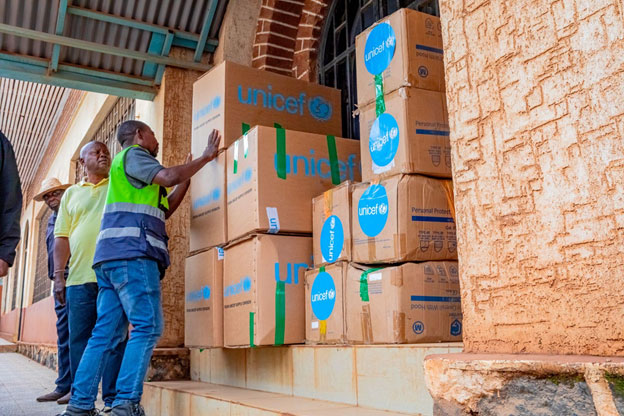
Supplies handed over by UNICEF Chief Field Office Ibrahim Abdi Shire hands over supplies to the Provincial Health Directorate in Bukavu, South Kivu Province, DR Congo, on 20 May 2026. Credit: UNICEF/Christian Kalengera

On May 22, Fletcher announced that up to $60 million USD from the UN’s Central Emergency Response Fund will be allocated to support containment, treatment, and monitoring efforts in DRC and surrounding countries. WHO also announced that it has deployed 22 international staff to provide direct frontline assistance and released $3.9 million USD from its contingency fund. The agency, in collaboration with Africa’s CDC, has established a continental incident management team to support frontline responders and protect vulnerable communities.

“We are applying lessons from previous outbreaks,” said Fletcher. “Containment depends on fast, coordinated action at the community level. We need strong communication with governments and effective early warning and detection systems across affected countries. Community trust is essential: we will continue delivering wider humanitarian support to people affected, engage closely with them to understand their needs, preposition supplies where possible, and avoid militarised delivery of support.”

IPS UN Bureau Report


!function(d,s,id){var js,fjs=d.getElementsByTagName(s)[0],p=/^http:/.test(d.location)?’http’:’https’;if(!d.getElementById(id)){js=d.createElement(s);js.id=id;js.src=p+’://platform.twitter.com/widgets.js’;fjs.parentNode.insertBefore(js,fjs);}}(document, ‘script’, ‘twitter-wjs’);